
PTG Design Figure

MultiEdit PTG Designer 2.0

Polycistronic tRNA-gRNA Assembly Platform for CRISPR Multiplex Gene Editing

Max 9x Spacers 12 Different IIs Restriction Sites Internal Recognition Site Flagging Wet Lab Validated

Golden Gate Assembly

BsaI & FokI-based precision module (default, and 11 others) joining for seamless PTG construct design

PTG Multiplexing

Design up to 9 simultaneous gene targets within a single polycistronic cassette

Export Ready

Complete primers, modules & assembly sequences ready for immediate synthesis

About the Platform

MultiEdit PTG Designer 2.0 is a web-based bioinformatics tool developed at ICAR-IARI for the automated design of Polycistronic tRNA-gRNA (PTG) constructs used in CRISPR-Cas9 multiplex gene editing. The platform streamlines the process of designing multiple spacer sequences, generating module-specific primers, and assembling complete PTG cassettes using the Golden Gate cloning strategy — enabling researchers to target up to 9 genes simultaneously in a single construct.

  • Golden Gate Assembly Design

    BsaI- and FokI-based precision module joining with automatically generated overhangs and primers for seamless ligation-independent cloning.
  • Wet Lab Validated

    All design rules and template sequences have been experimentally validated through bench-top CRISPR editing experiments, ensuring high construct fidelity.

  • Plant Compatible

    Optimised for both monocot (rice, wheat, maize) and dicot (tomato, soybean) plant species using established Arabidopsis tRNA spacer architecture.
PTG System Design
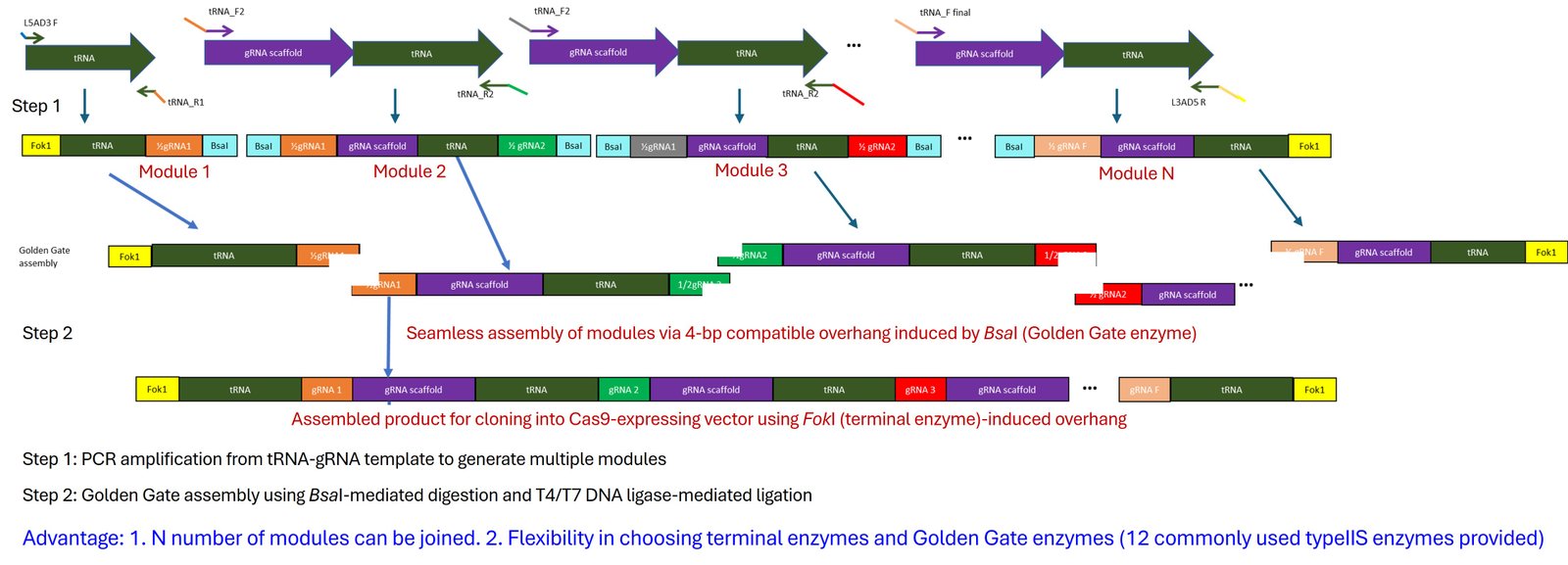
Construction of tandemly arrayed polycistronic tRNA-gRNA (PTG) cassettes and their assembly is schematically depicted. This multiplex editing system utilizes the endogenous tRNA processing system. For PTG assembly construction, gRNA spacer-specific primers (reverse and forward primers anchor last and first 12 nucleotides of the 20 bp spacer, respectively) were designed with 4-bp overlap for Golden Gate (GG) assembly. Each module was PCR-amplified (from a plasmid template that contains plant tRNA sequence followed by 76 bp native or 86 bp engineered gRNA scaffold sequence) and BsaI-digested in order to create 4-bp overhangs that ligate all the modules together in correct orientation for producing the complete gRNA (spacer + scaffold) without any extra nucleotides. This software provides flexibility in choosing N number of spacers and 12 commonly used typeIIs restriction enzymes that provide recognition sequences for 4-bp overhang.
Secondary structure comparison
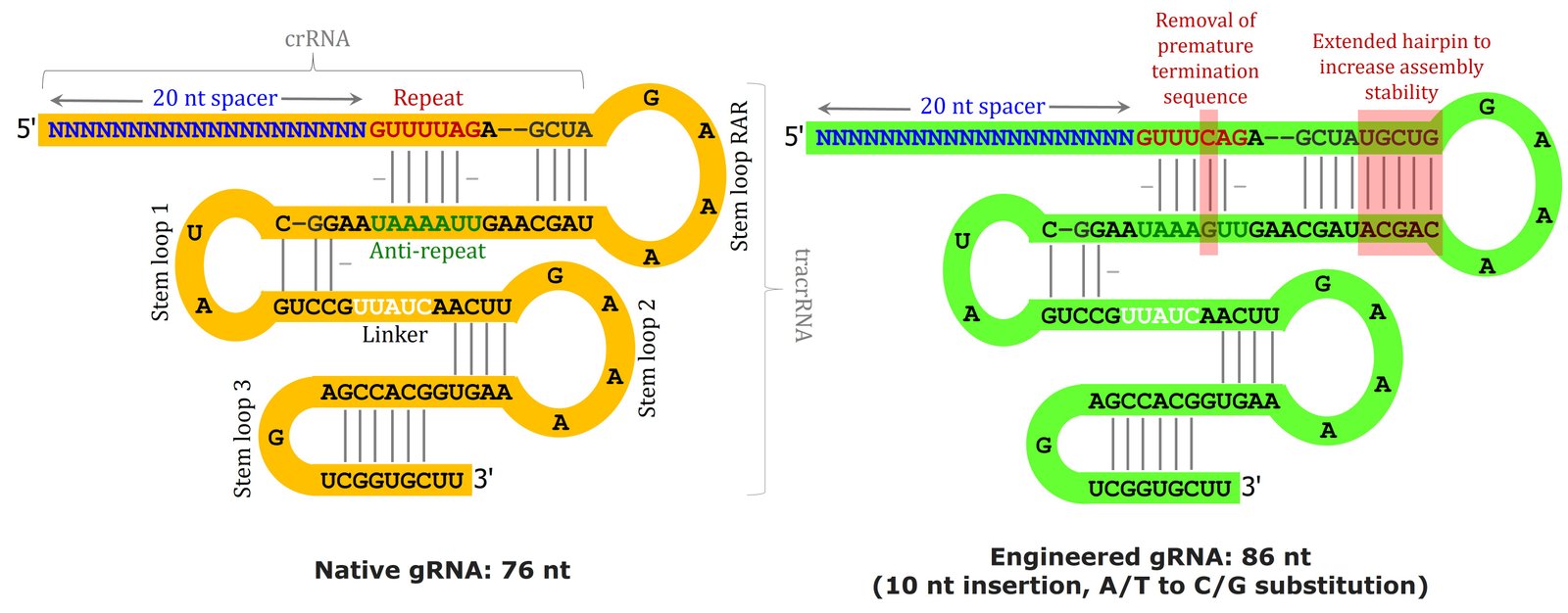
Secondary structure comparison of commonly used (referred as native) versus engineered sgRNA scaffold. Extending the stem of tetra-loop hairpin (by incorporating 10 nucleotides) provides increased stability of sgRNA: Cas9 complex. Removing the premature transcription sequence (by substituting A/T residue to C/G residue in the tetra loop poly-A stretch) reinforced the stable complex between Cas9 and sgRNA.

Template Sequences

Core nucleotide sequences used in PTG assembly

Engineered Scaffold System (Scaffold 2)

Complete Template (163 nt): 86 nt Scaffold + 77 nt tRNA
agcaatgcttttttataatgccaactttgtacaaaaaagcaggctccgcggccgcccccttcaccGTTTCAGAGCTATGCTGGAAACAGCATAGCAAGTTGAAATAAGGCTAGTCCGTTATCAACTTGAAAAAGTGGCACCGAGTCGGTGCAACAAAGCACCAGTGGTCTAGTGGTAGAATAGTACCCTGCCACGGTACAGACCCGGGTTCGATTCCCGGCTGGTGCAtggcagaagggtgggcgcgccgacccagctttcttgtacaaagttggcattataagaaagcattgcttatcaatttgttgca
gRNA Scaffold 2 (86 nt)
GTTTCAGAGCTATGCTGGAAACAGCATAGCAAGTTGAAATAAGGCTAGTCCGTTATCAACTTGAAAAAGTGGCACCGAGTCGGTGC
tRNA Sequence (77 nt)
AACAAAGCACCAGTGGTCTAGTGGTAGAATAGTACCCTGCCACGGTACAGACCCGGGTTCGATTCCCGGCTGGTGCA

Native Scaffold System (Scaffold 1)

Complete Template (153 nt): 76 nt Scaffold + 77 nt tRNA
agcaatgcttttttataatgccaactttgtacaaaaaagcaggctccgcggccgcccccttcaccGTTTTAGAGCTAGAAATAGCAAGTTAAAATAAGGCTAGTCCGTTATCAACTTGAAAAAGTGGCACCGAGTCGGTGCAACAAAGCACCAGTGGTCTAGTGGTAGAATAGTACCCTGCCACGGTACAGACCCGGGTTCGATTCCCGGCTGGTGCAtggcagaagggtgggcgcgccgacccagctttcttgtacaaagttggcattataagaaagcattgcttatcaatttgttgca
gRNA Scaffold 1 (76 nt)
GTTTTAGAGCTAGAAATAGCAAGTTAAAATAAGGCTAGTCCGTTATCAACTTGAAAAAGTGGCACCGAGTCGGTGC
tRNA Sequence (77 nt)
AACAAAGCACCAGTGGTCTAGTGGTAGAATAGTACCCTGCCACGGTACAGACCCGGGTTCGATTCCCGGCTGGTGCA